
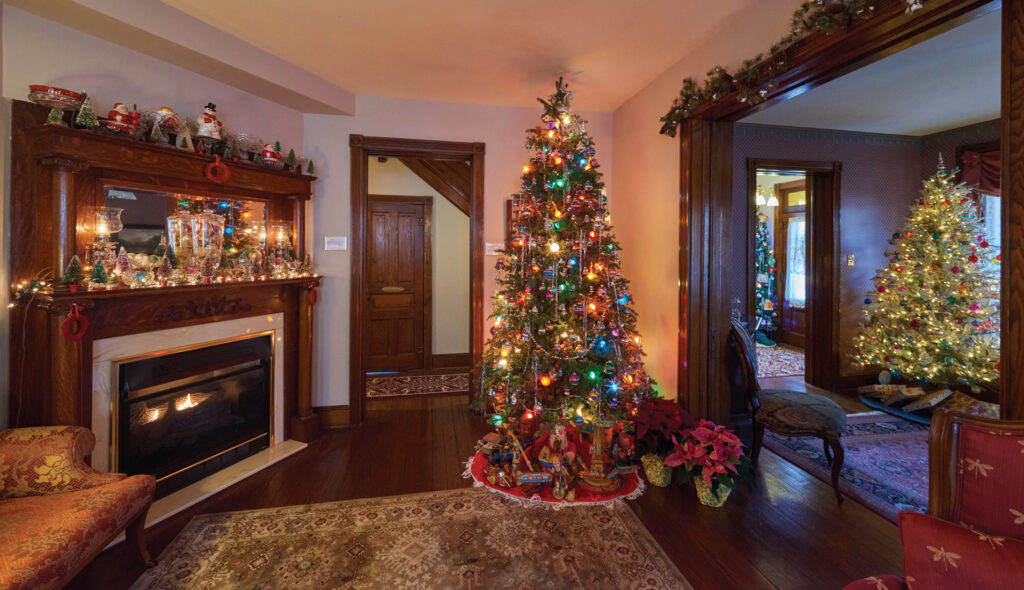
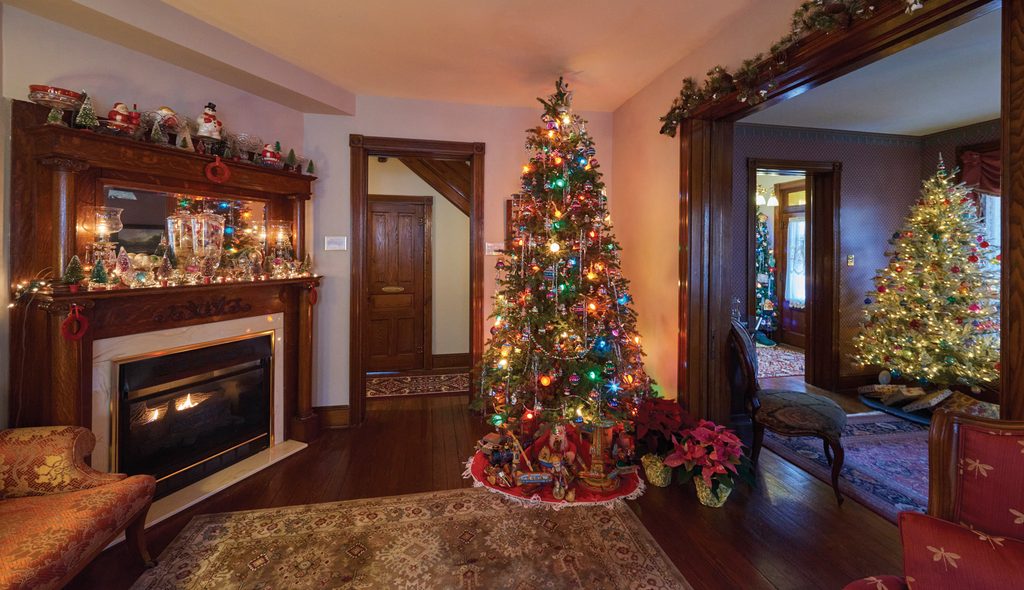
Carl Kosko, the owner of The Inn & Spa at Intercourse Village, has loved Christmas since he was a child and has been collecting antique and vintage decorations for as long as he can remember. Despite having a large property to decorate, Carl says the items he uses to decorate seven or more trees, fireplace mantels, the staircase and tabletops represent just a portion of his collection.
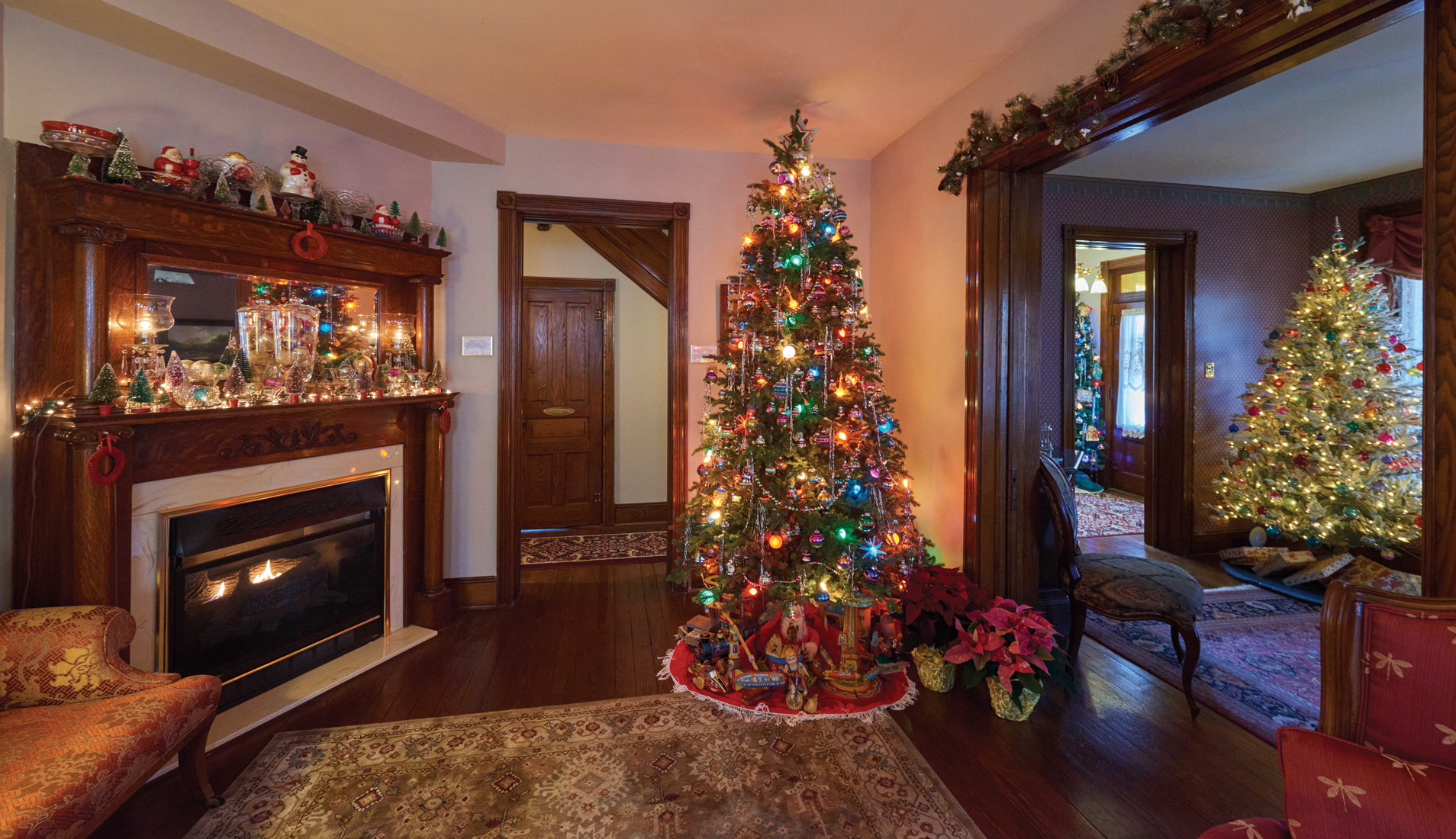
Carl pinpoints his fascination with all-things Christmas to an airplane flight he took at the age of 7. His family was relocating from Baltimore to Ohio, and he shared his fears of flying for the first time with his Aunt Mary. “She instructed me to look out the window and imagine all the lights were Christmas lights,” Carl recalls. “That did it! I became hooked on Christmas lights,” noting his collection includes strings of lights that date to the 1930s.
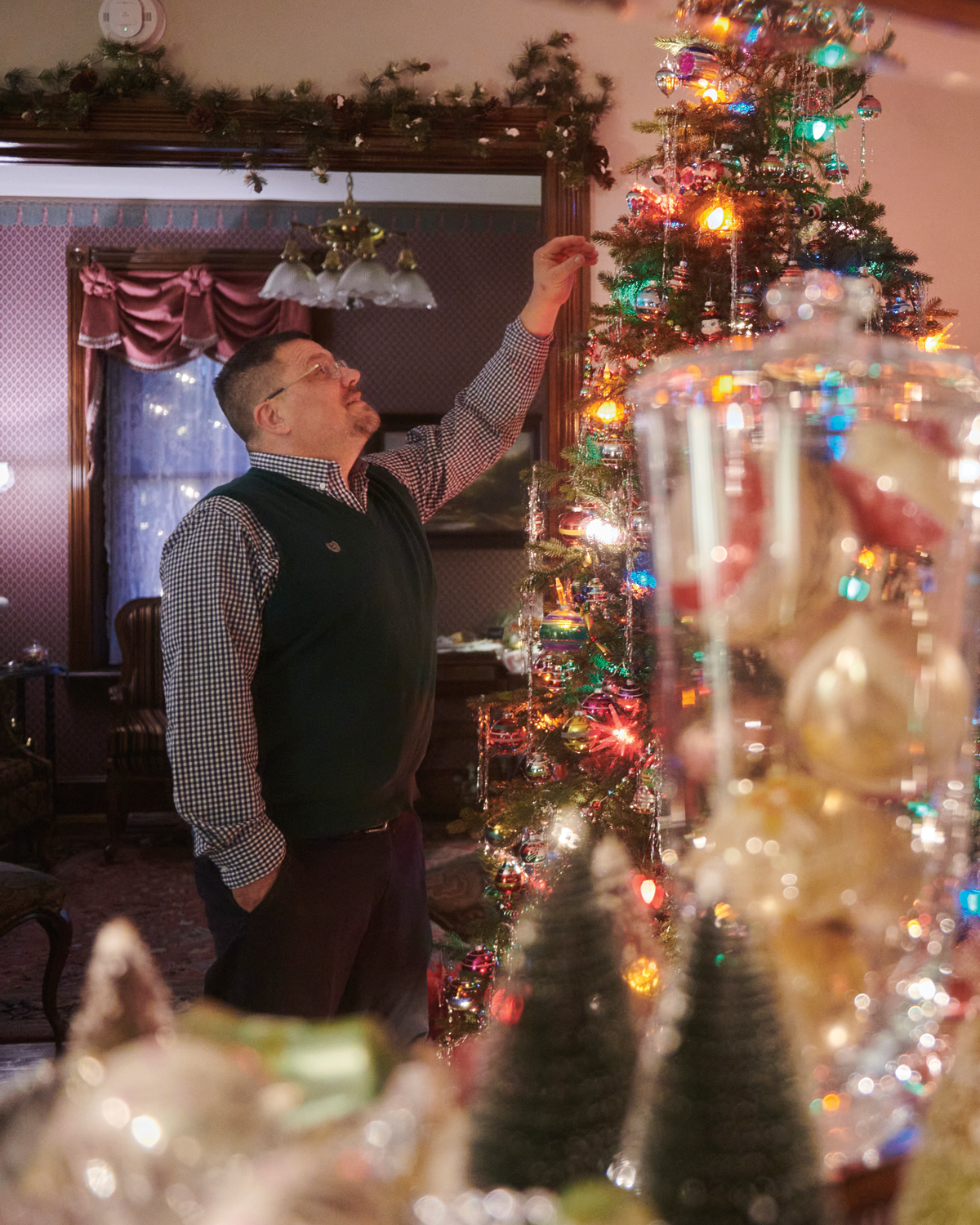
Born in Baltimore, Carl has lived up and down the East Coast, due to his father’s career as a clothing designer. “I was kind of floundering in high school and had no career aspirations,” he shares. Noting his son’s love of cooking, Carl’s father suggested he consider culinary school. Carl applied and was accepted at the Rhode Island School of Design’s Culinary Arts Program. After graduating, he landed a position in the kitchen of the Yankee Clipper Inn in Rockport, Massachusetts. Finding his niche, he stayed for 10 years. “Working there convinced me that innkeeping was the direction I wanted to take,” he says.
Knowing the inn’s owners were approaching retirement, Carl began searching up and down the East Coast for a bed & breakfast property. He and his family (which had grown to include three children) were ultimately drawn to Lancaster County. “It was close to family,” he says of one of the enticements. Plus, being a chef, the allure of farm-grown products proved irresistible. Carl found a property in New Holland – Harvest Moon, which offered four guest rooms – and became the owner of a bed & breakfast.
Following a divorce 10 years ago, Carl developed a five-year plan, with buying a larger property being the end goal. After looking at several properties (here and out of the area), Carl’s realtor shared that The Inn & Spa at Intercourse Village had been quietly put on the market. In 2020, he made an offer on the property, which was accepted. “It was a total turnkey operation,” he says. Plus, it offered an amenity not found at your typical B&B, a spa that offers a menu of massage services.
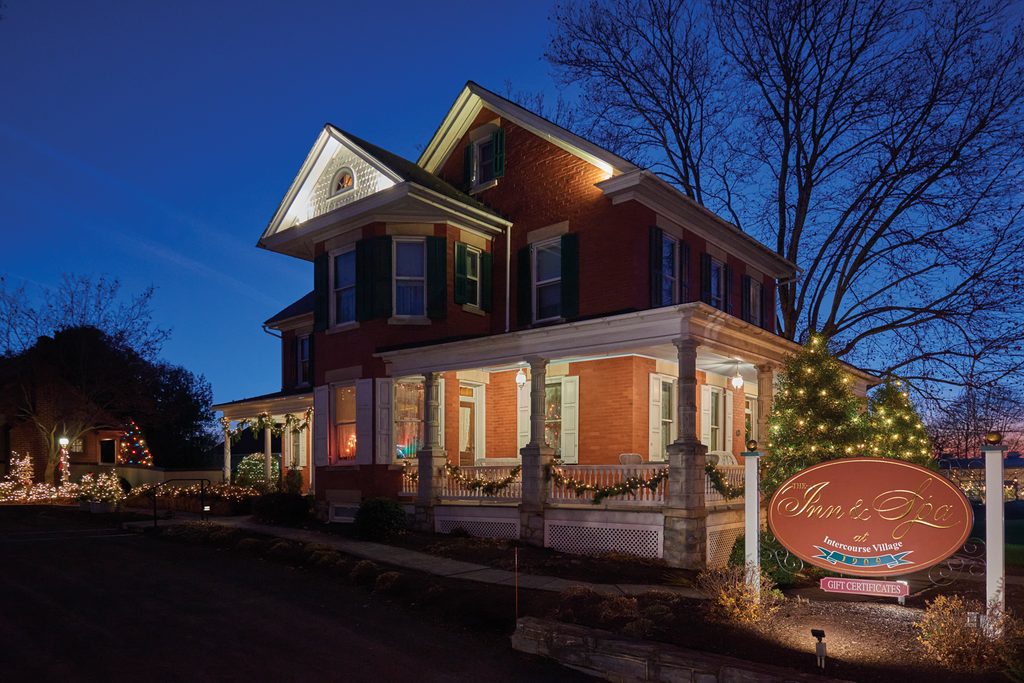
Built in 1909 for John and Mary Leaman, the house stayed in the family until 1993, at which time it became a medical/dental office. Elmer and Ruth Ann Thomas purchased it at auction in 1995 and spent the next 25 years restoring, furnishing and expanding the property to offer 12 rooms and suites. Today, it’s open year-round, has a staff of nine employees that includes two who boast nearly 40 years of experience between them, and a chef who is on the job five days a week (Carl handles the other two days). “They all have a sense of ownership, they understand what it means to be in the hospitality industry,” he says. “My job is marketing the property and driving business our way.”
Carl notes that being the owner of such a property is not all “tea and crumpets. It’s work, but it’s a wonderful kind of work. You get to meet people from all over the world.” He finds that food plays a key role in making connections with guests. “I just love to talk to them about the food they enjoy at home,” he says. “Food is what connects us.”
The Most Wonderful Time of the Year
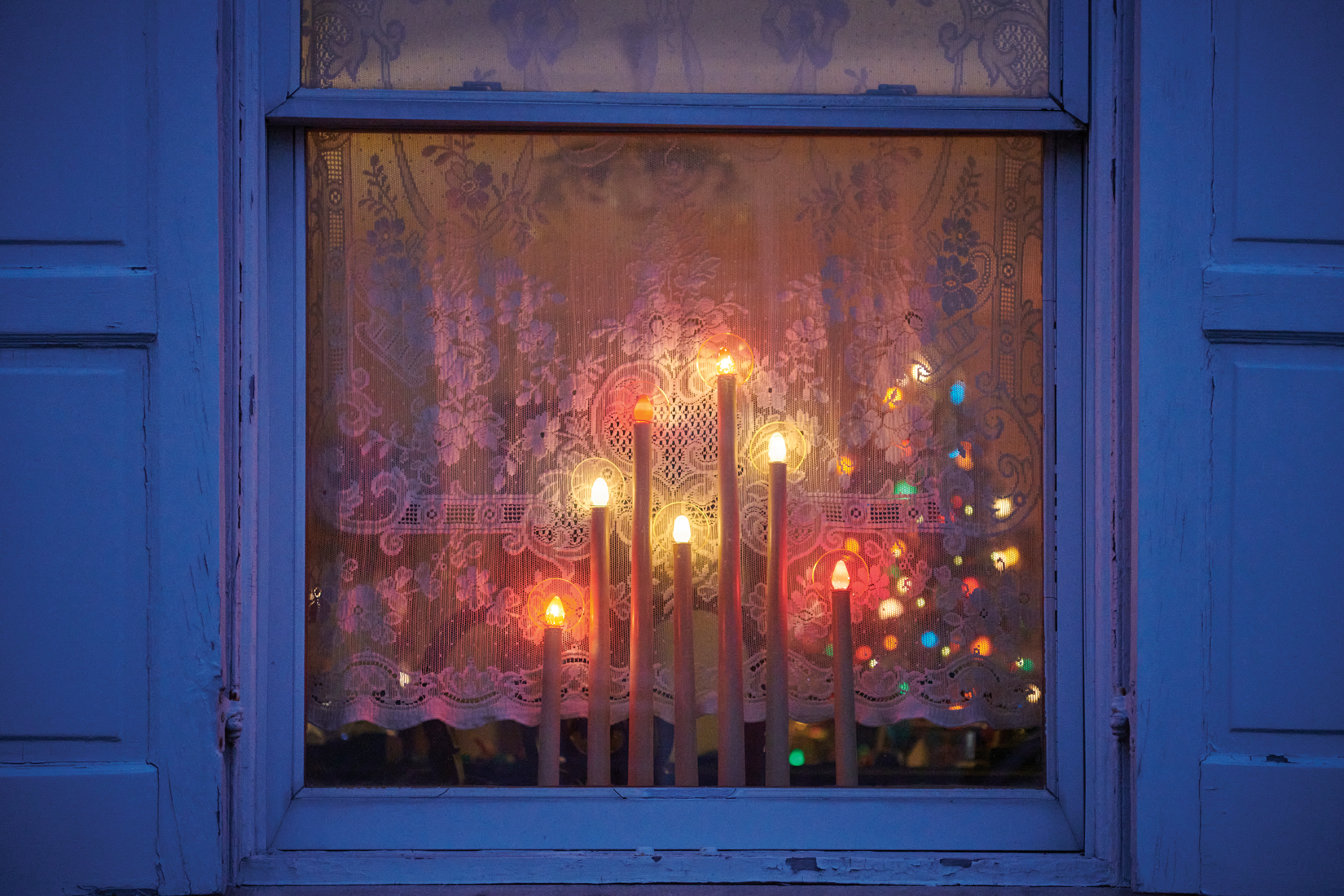
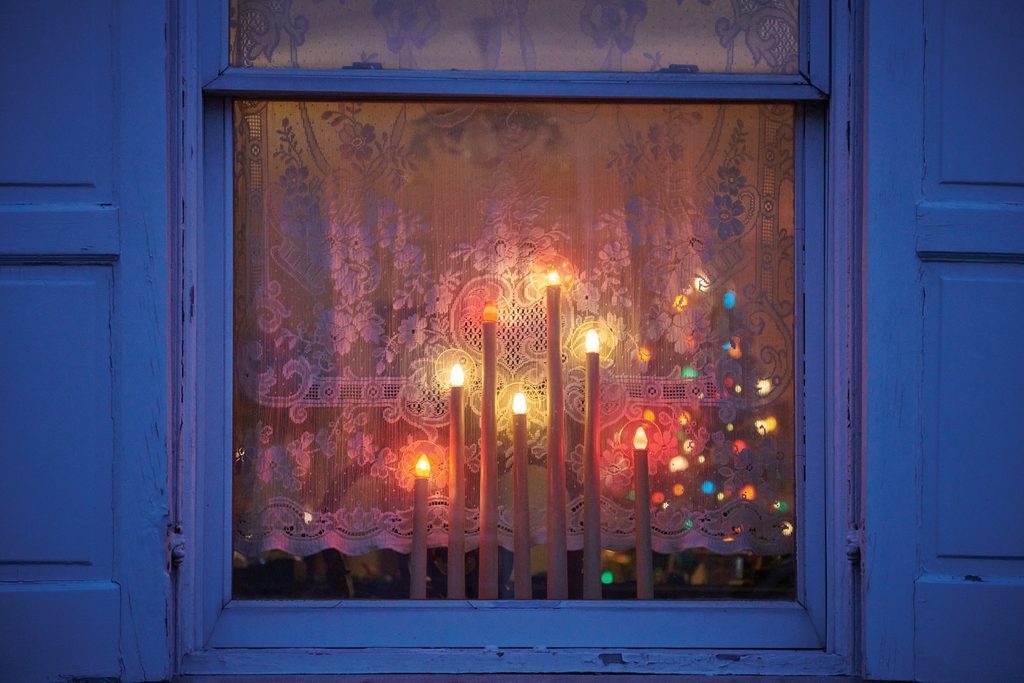
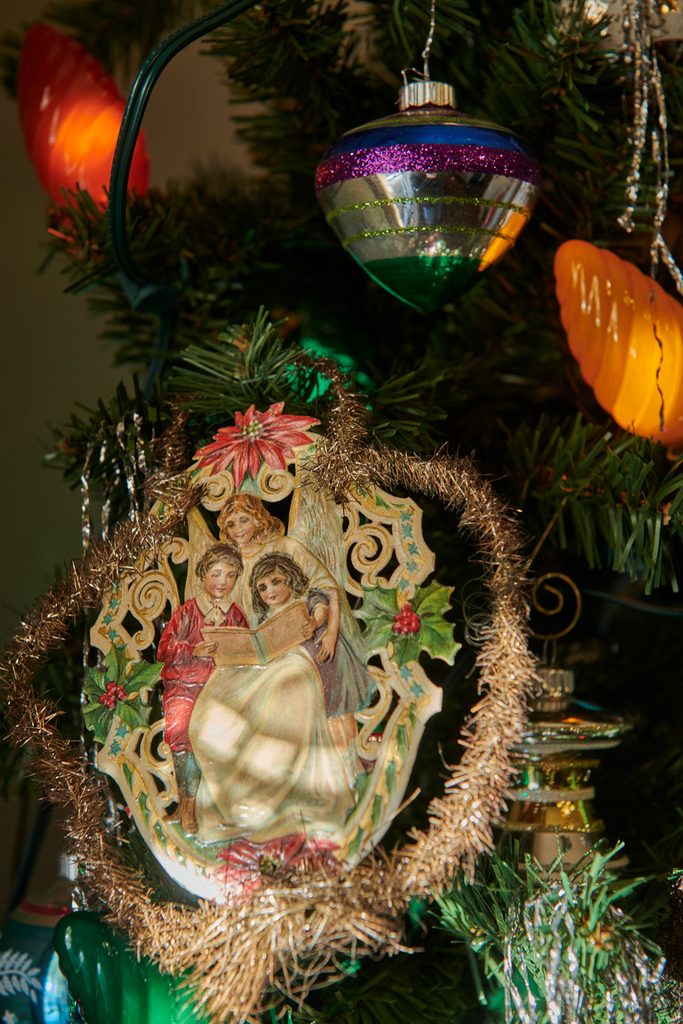
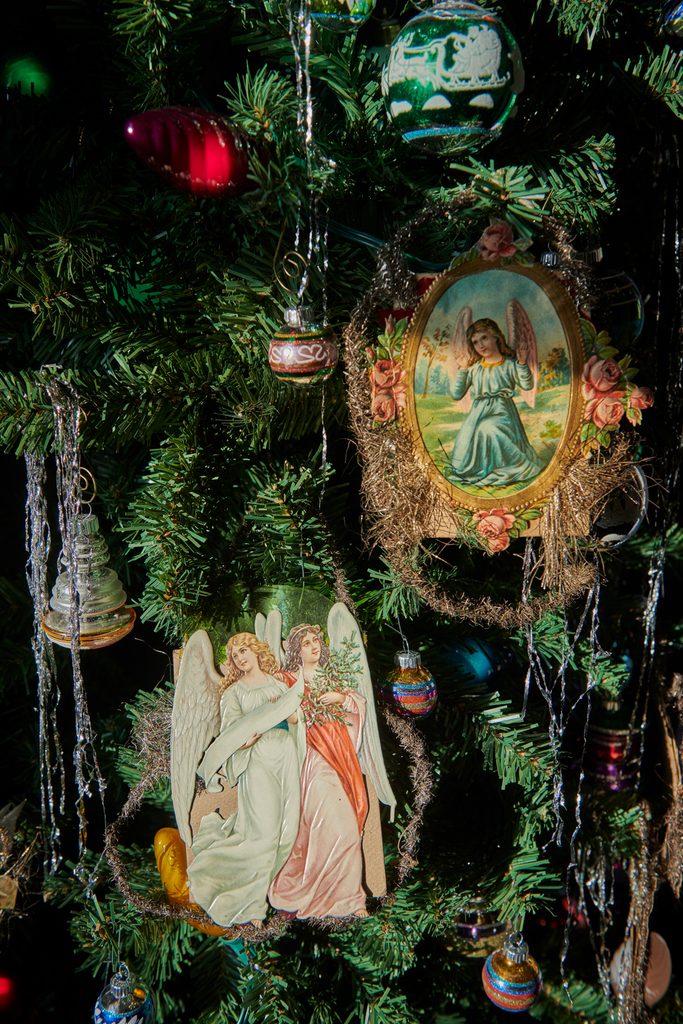
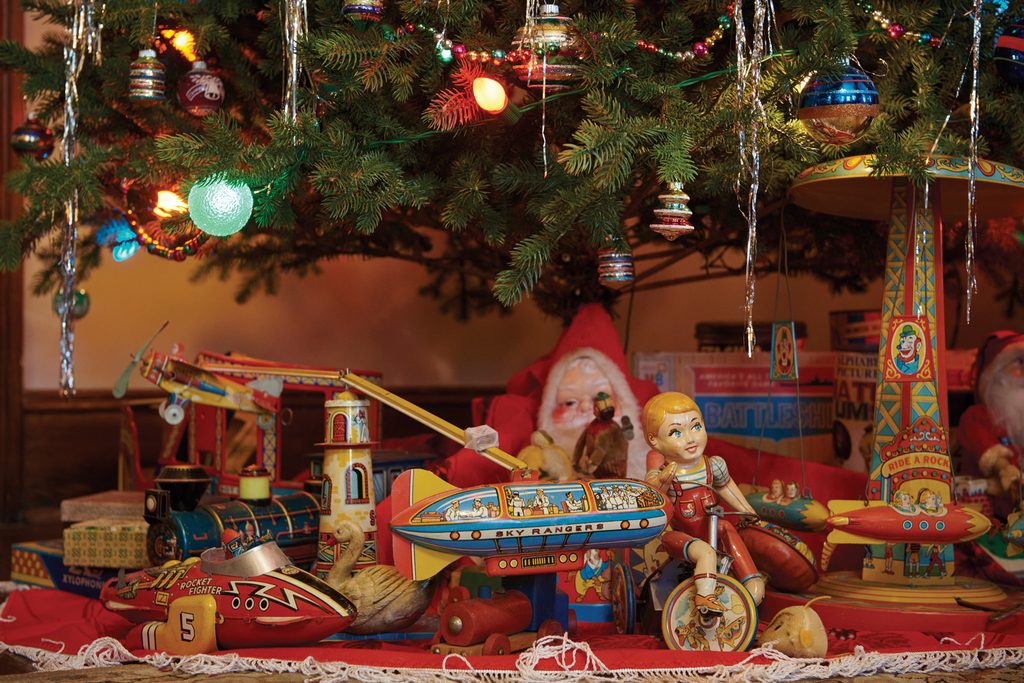
“I’m always shopping,” Carl says of being on the hunt for antique and vintage holiday decorations. He still remembers his first purchase. “It was a string of lights from the ’30s,” he recalls, noting that the initial purchase has given way to more than 100 boxes of lights, including bubble lights, which debuted in the early 1940s. He prefers “the old ones” that are filled with oil or the models that are filled with two different liquids that produce lava-lamp-like bubbling.
Peruse the Internet and “bubble lights” will take you down the proverbial rabbit hole. (As for Carl, he learns a lot about his hobby through The Golden Glow of Christmas Past, the world’s largest organization “dedicated to the knowledge and collecting of vintage and antique Christmas.”)
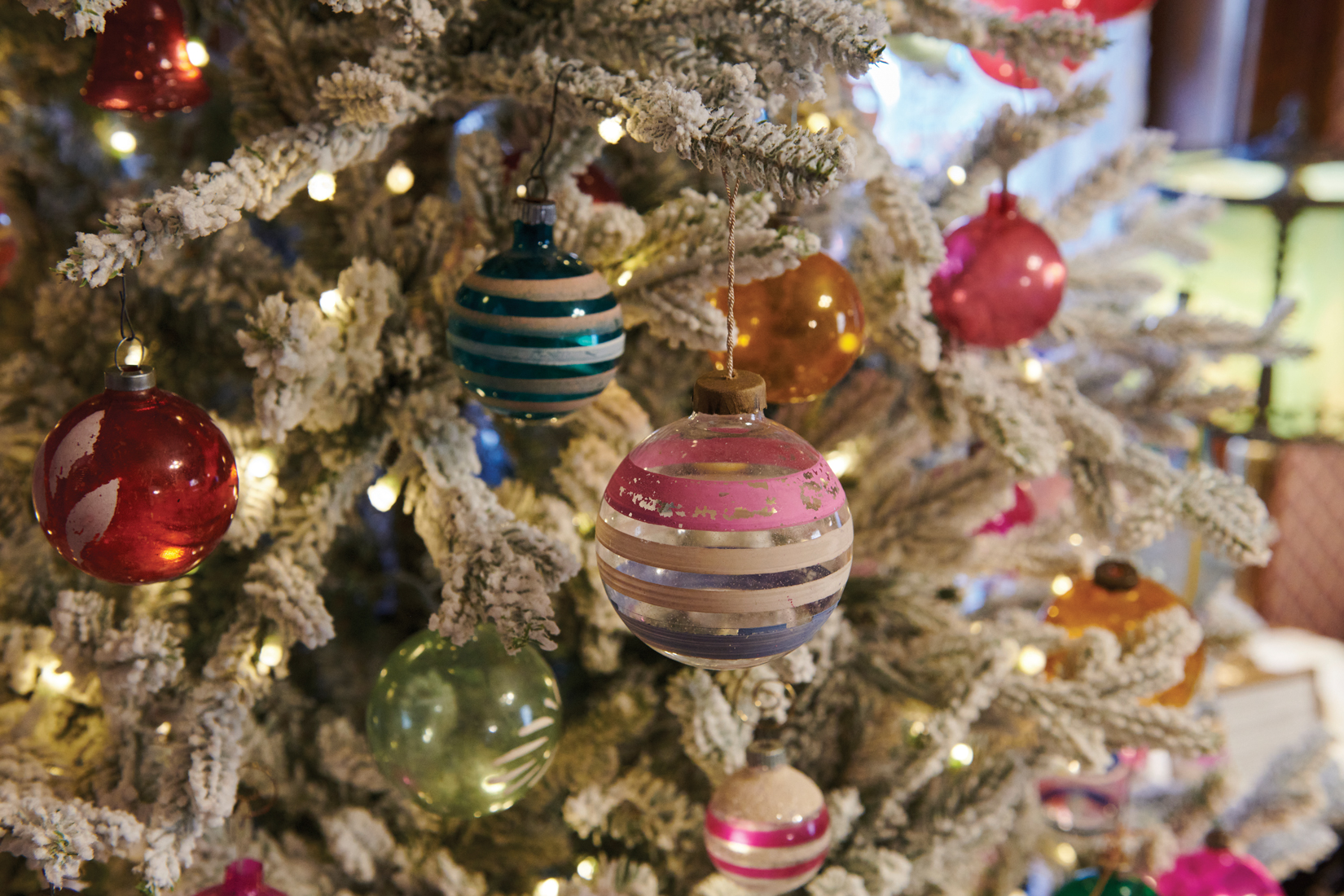
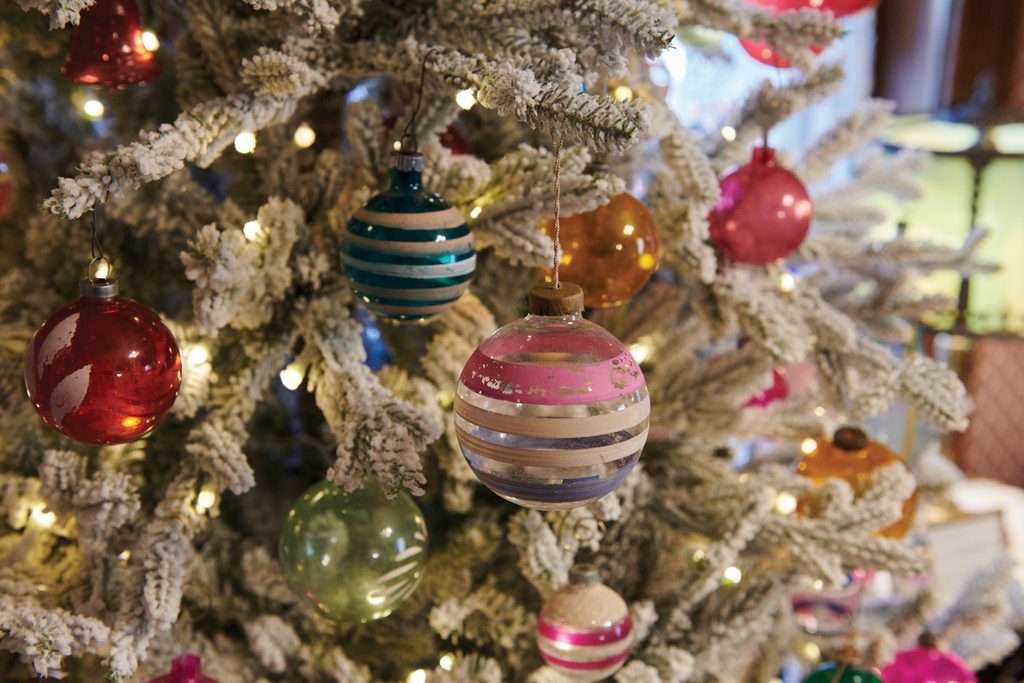
The development of electric Christmas lights dates to the 1880s. They became widely available in the early 1900s. Initially, most were made and sold by electrical companies that manufactured them as a sideline business, including NOMA, which went on to become the country’s largest manufacturer of Christmas decorations. The company survived the Depression with some savvy marketing campaigns that convinced Americans Christmas lights were an essential part of holiday decorating and served as a way to brighten the country’s morale. During World War II, the company reverted to making wooden toys and other novelties in order to devote all its resources to the war effort, which was also reflected in ornaments from that period. According to Carl, companies refrained from using valuable silver and instead created clear glass ornaments topped with caps made of paper so that the metal could be diverted to war-time needs.
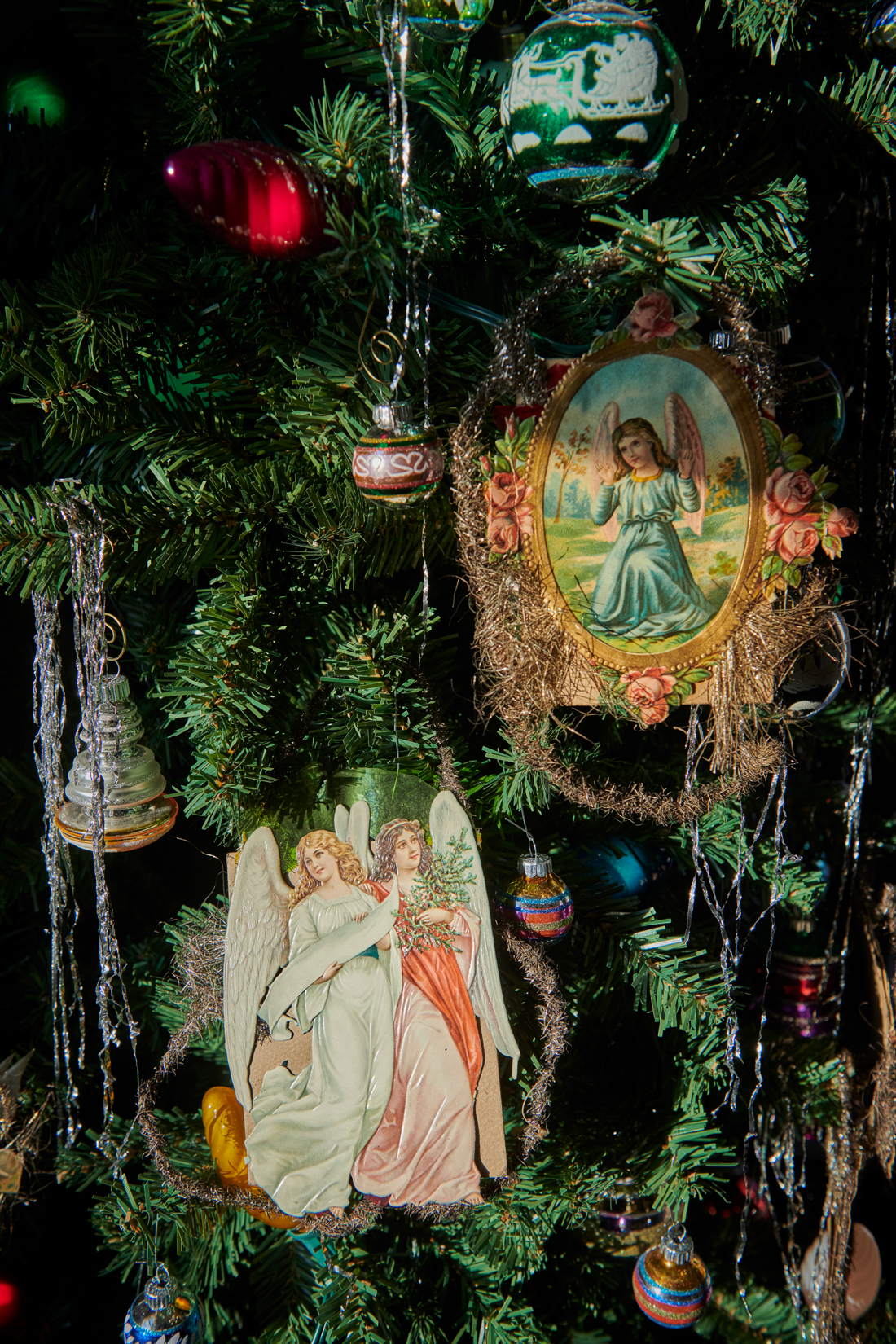
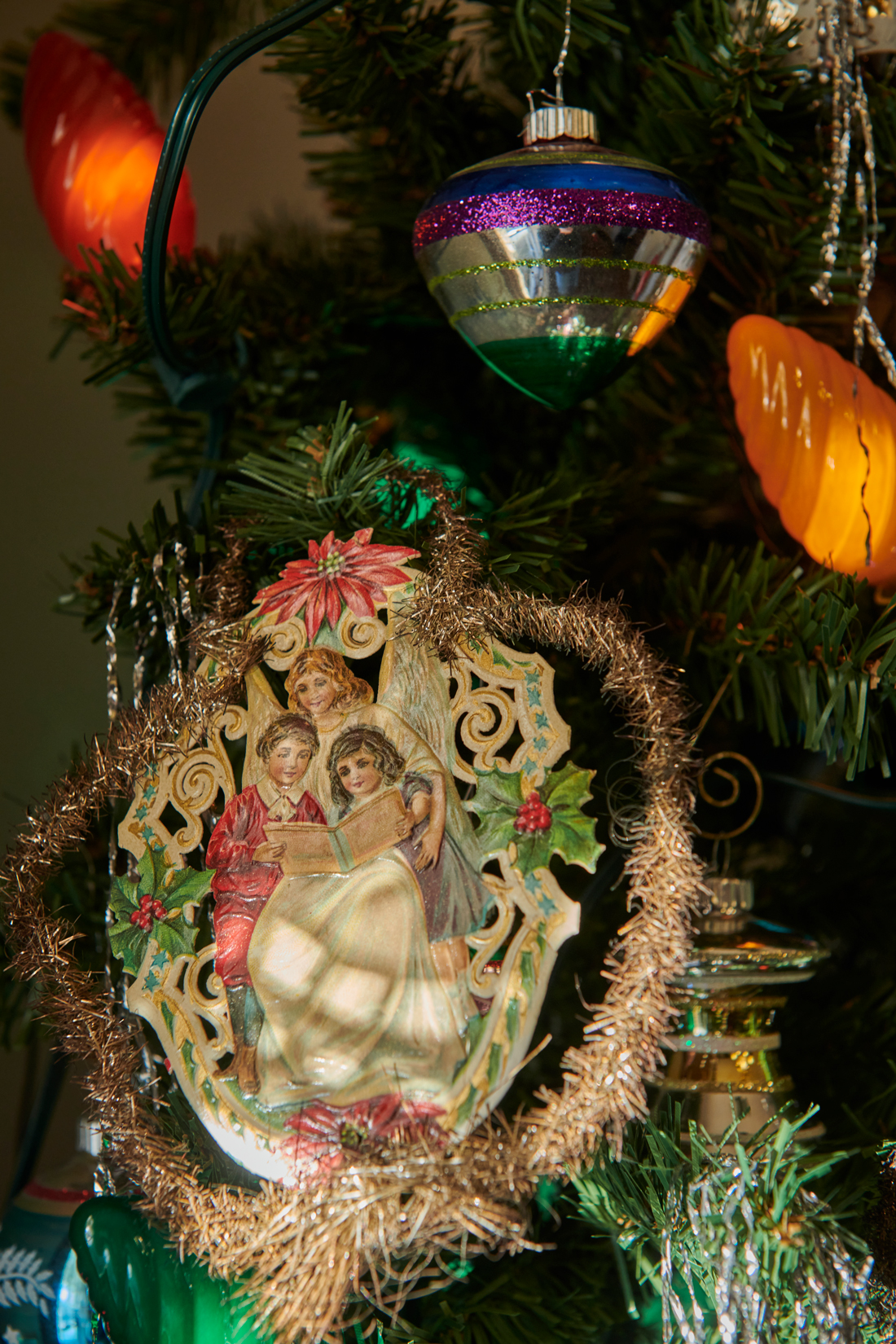
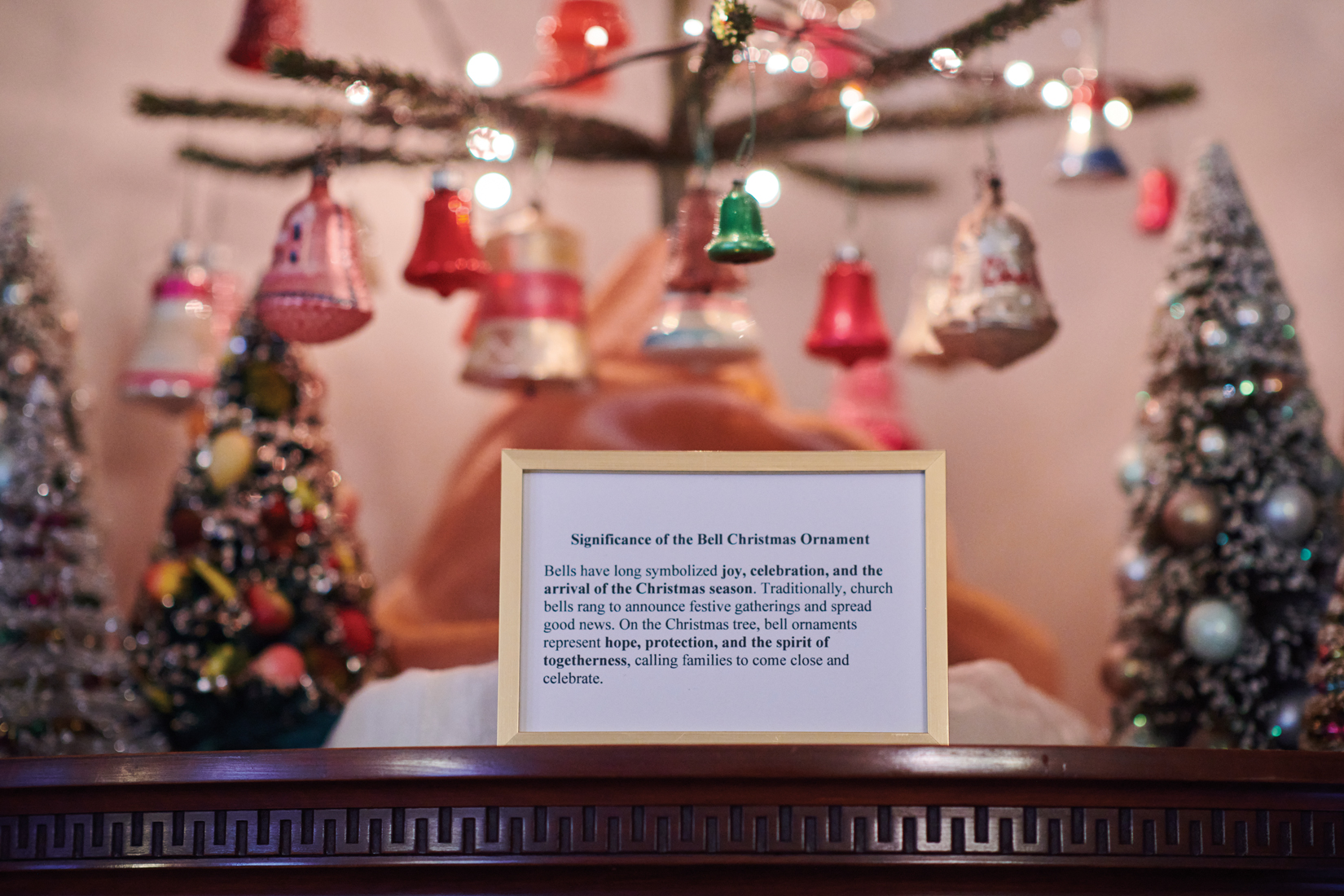
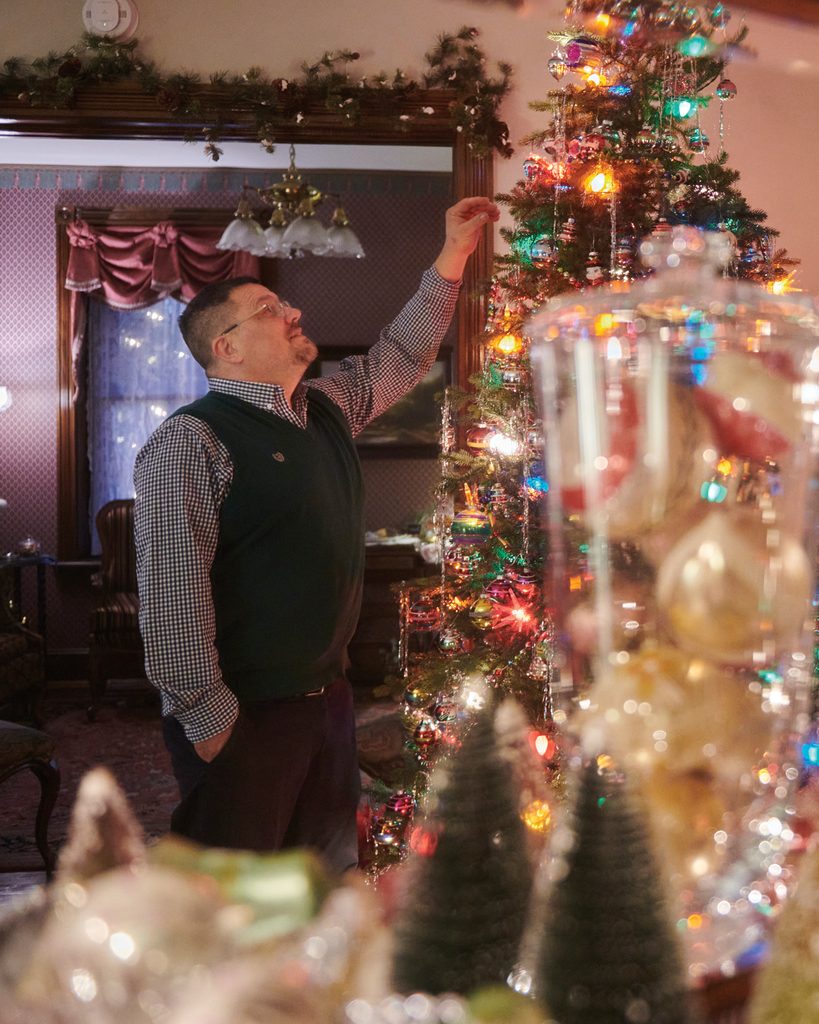
Carl readily admits he’s always thinking about and planning his holiday displays. “Even before the holidays are over, I’m thinking about next year,” he confirms. One of Carl’s favorite childhood memories is laying under his family’s decorated tree and looking up through its branches, taking in the lights, tinsel and ornaments. “It cast a spell over me,” he says. In decorating the inn, he aims to instill that same sense of wonder in his guests. “I’ve had so many return and give me ornaments they’ve come across and thought I’d enjoy,” he shares. “I’m always touched by the thought.”
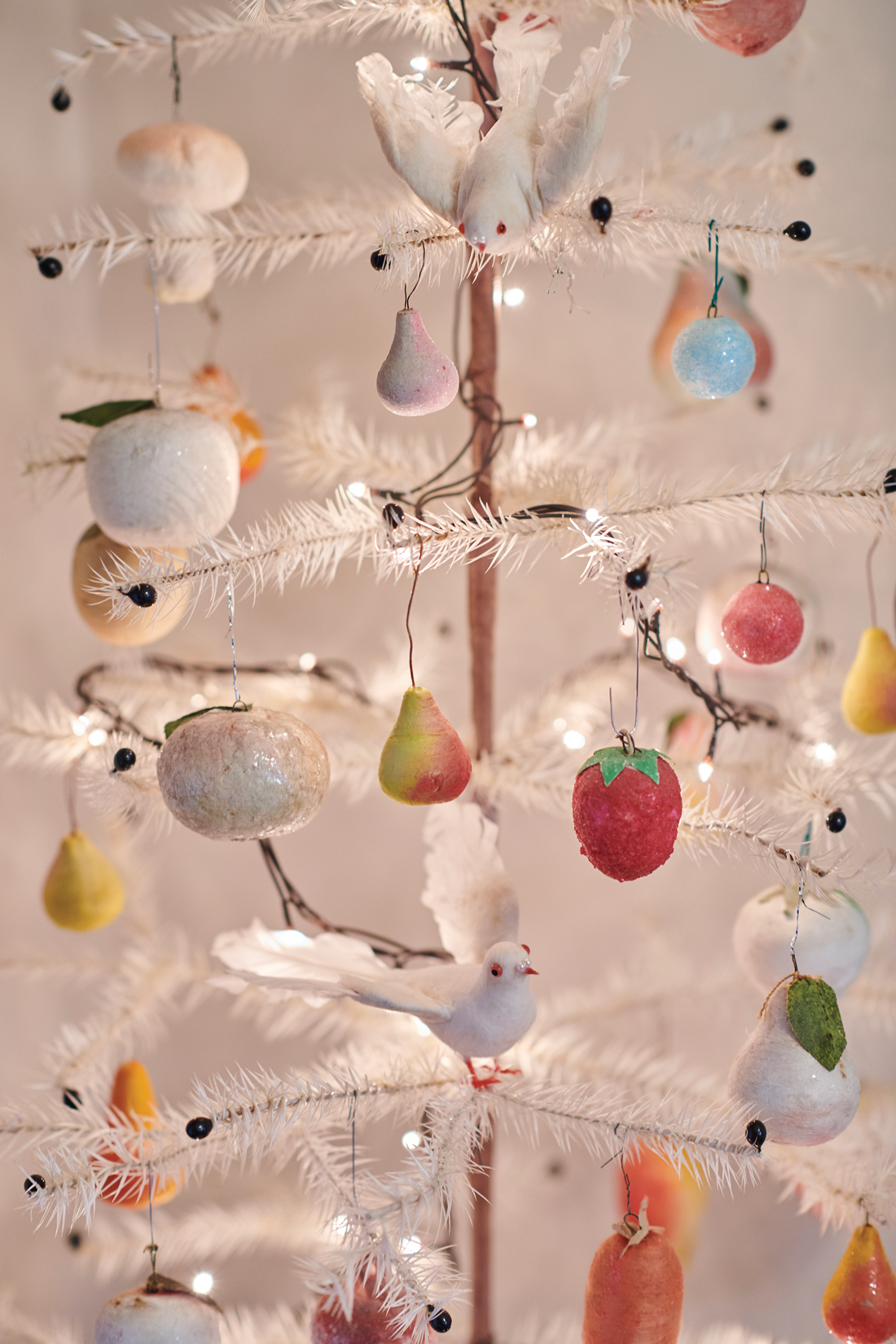
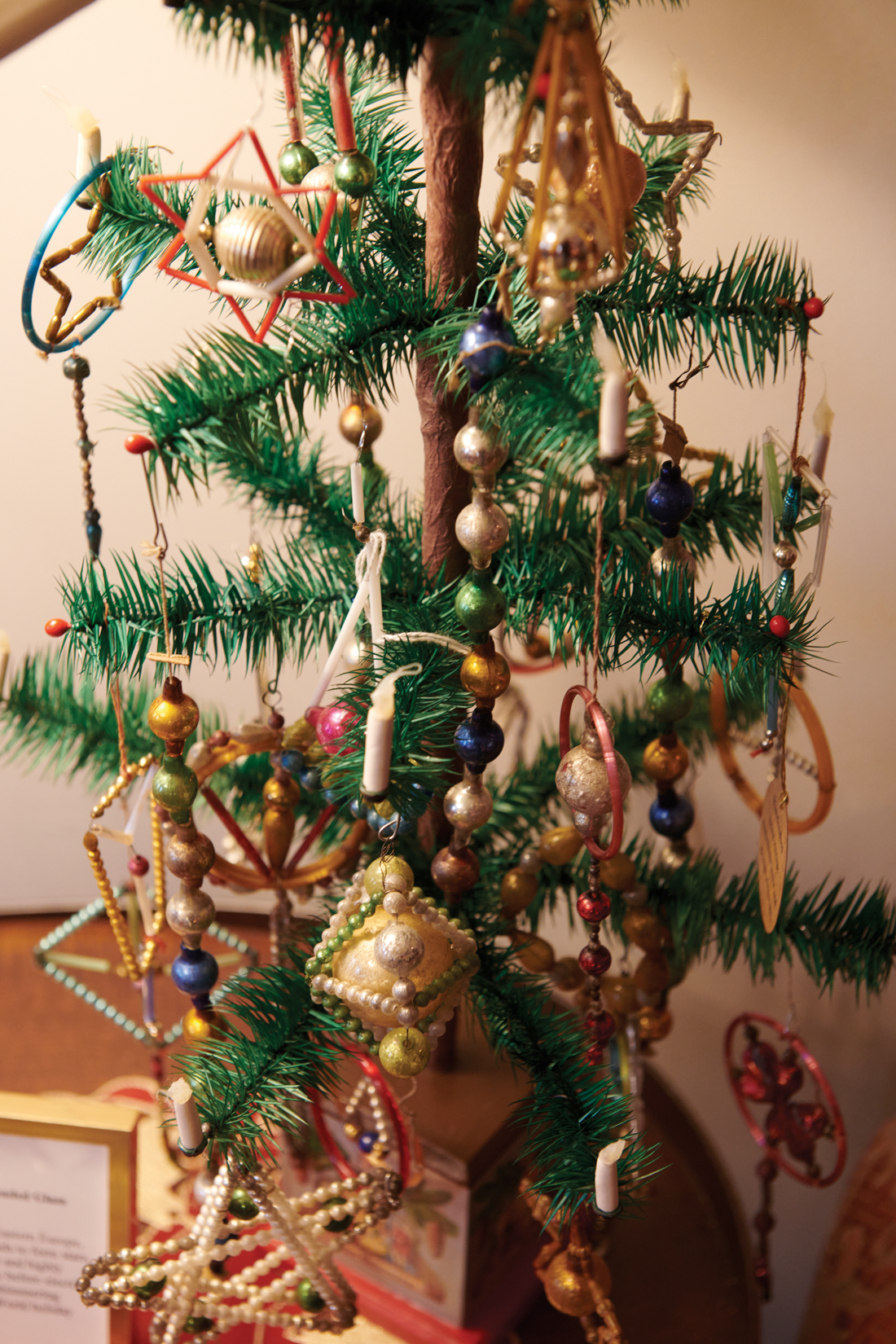
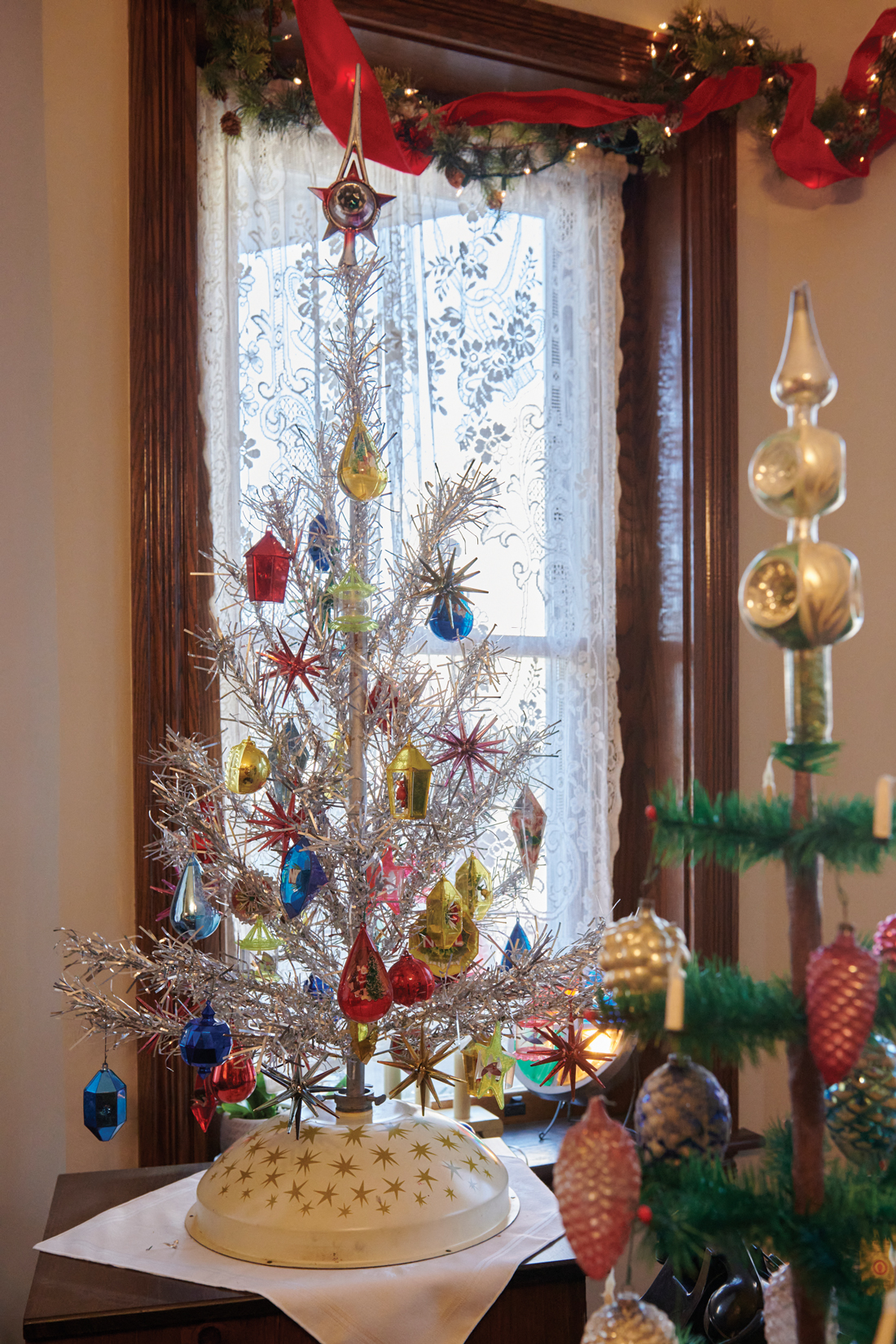
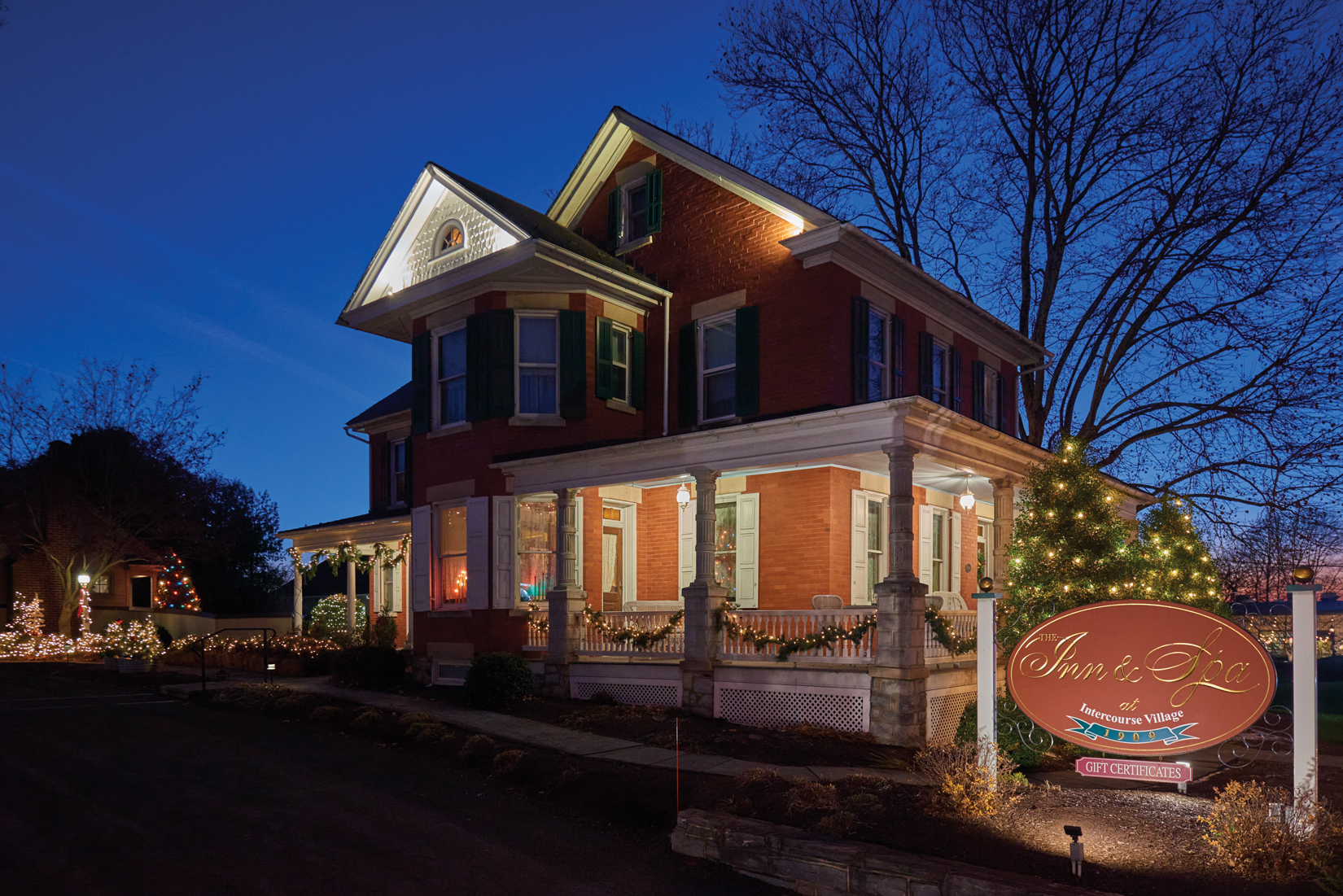
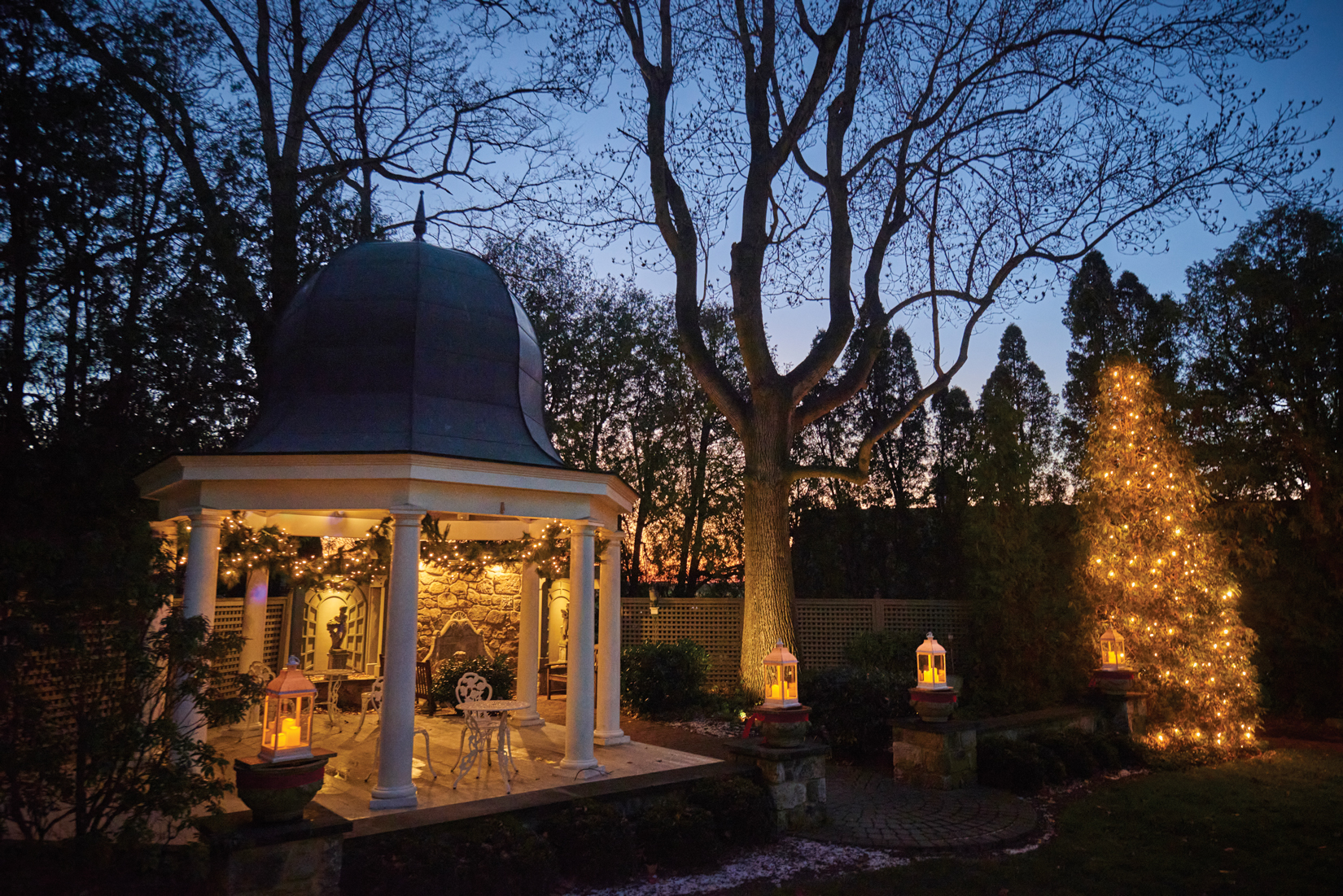
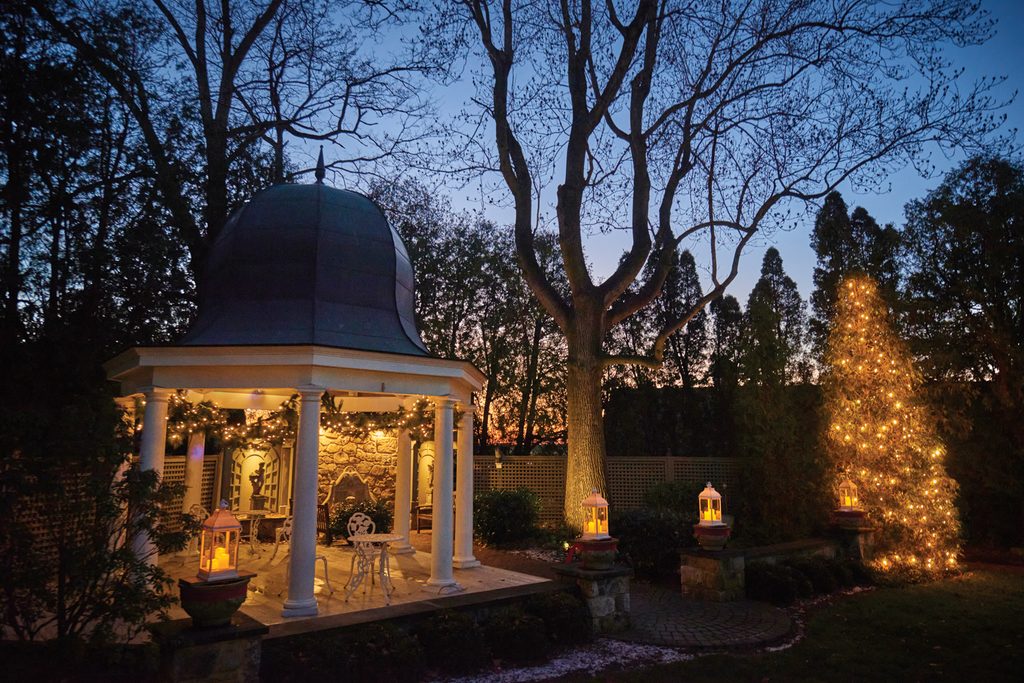
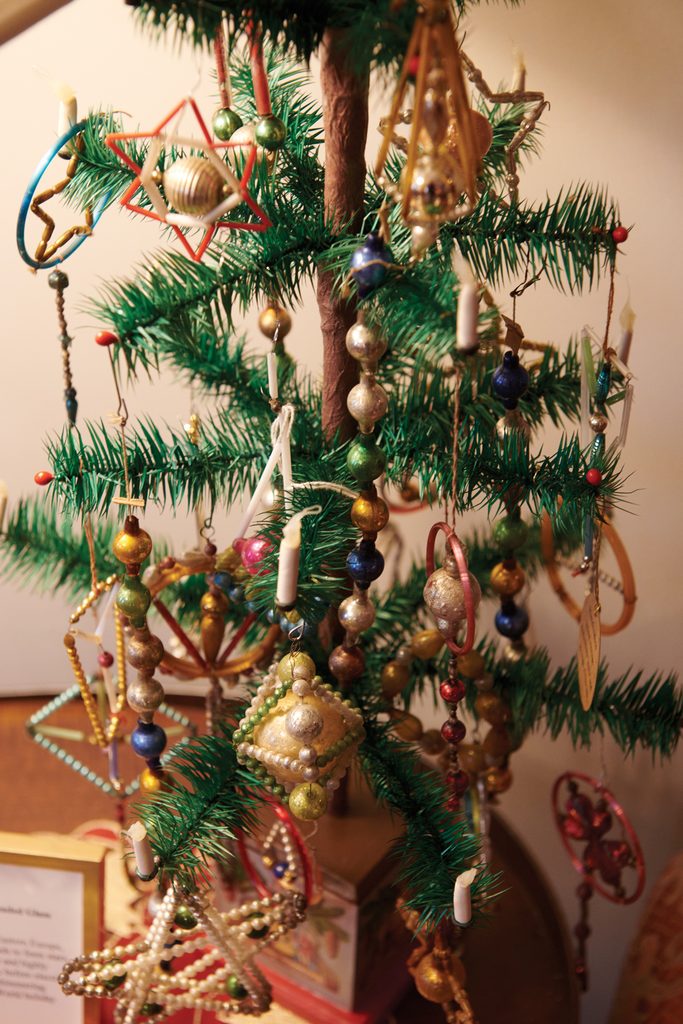
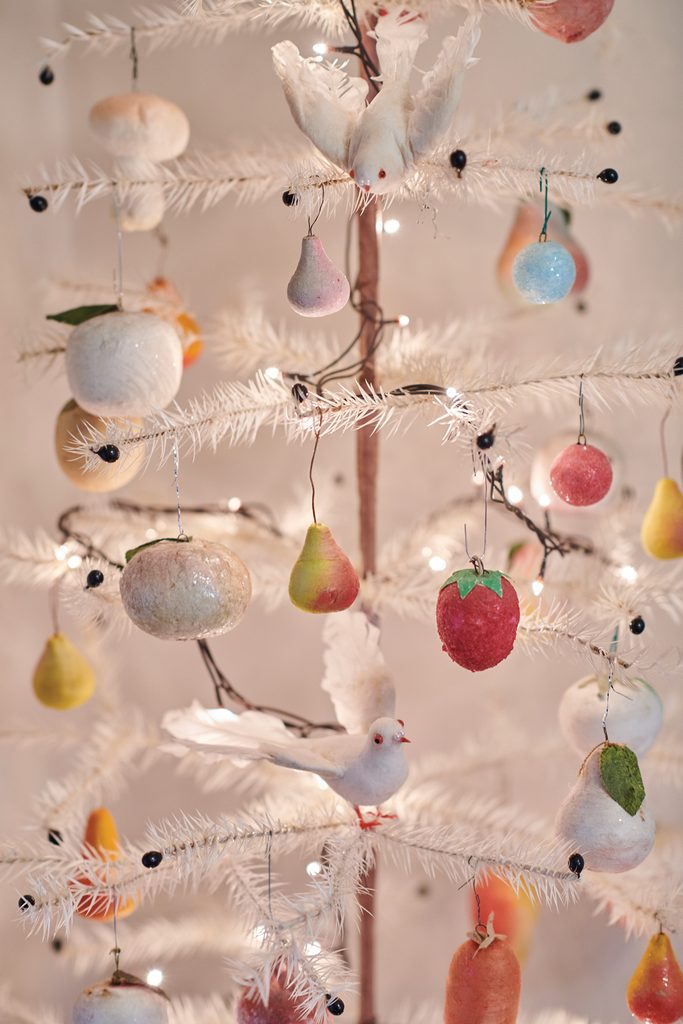
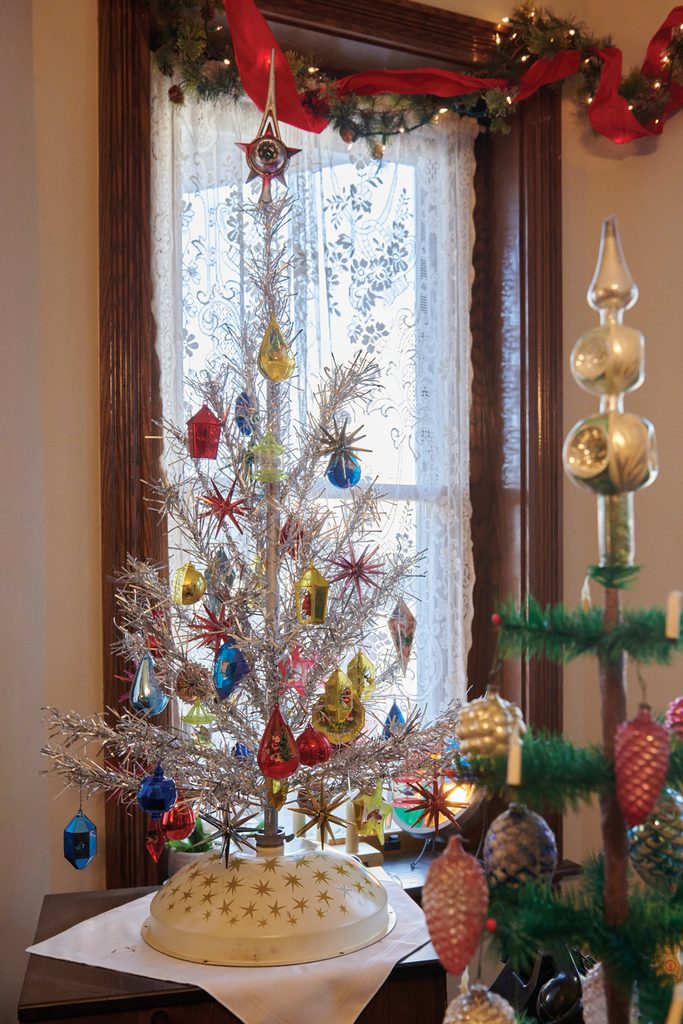
Once Carl has his plan in place, he and staff members begin decorating the exterior of the property in October. “We probably use 10,000 lights outside,” he estimates. By early November, the transformation begins inside the inn. “We try to be fully decorated by Thanksgiving,” he notes. Last year, seven trees decorated the premises, ranging in style from a traditional evergreen to flocked and vintage aluminum trees. Each was decorated to reflect a period of time, a company (such as Shiny Brite and Christopher Radko), a style, etc. “This year, I want to add a primitive-style tree,” he reports.
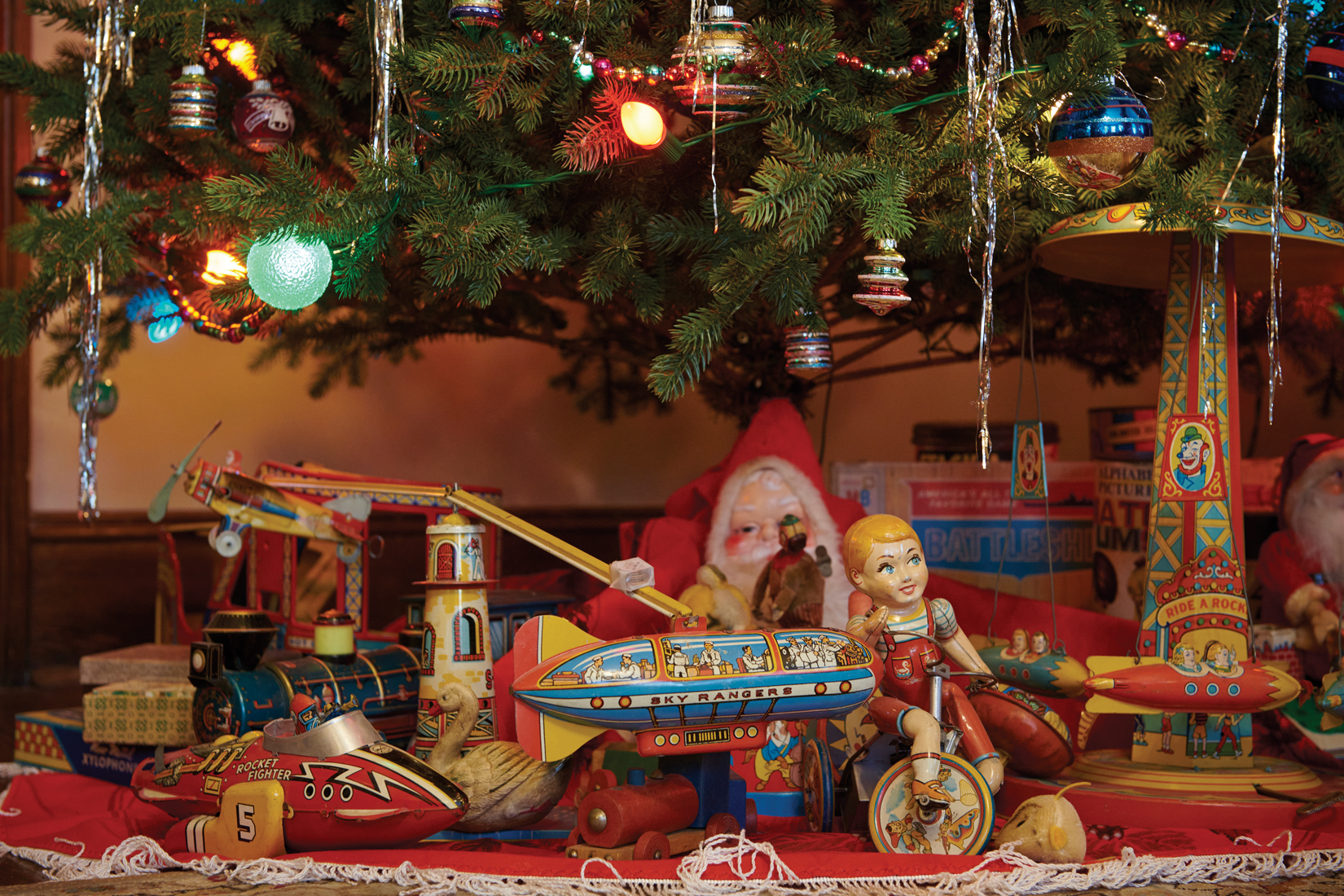
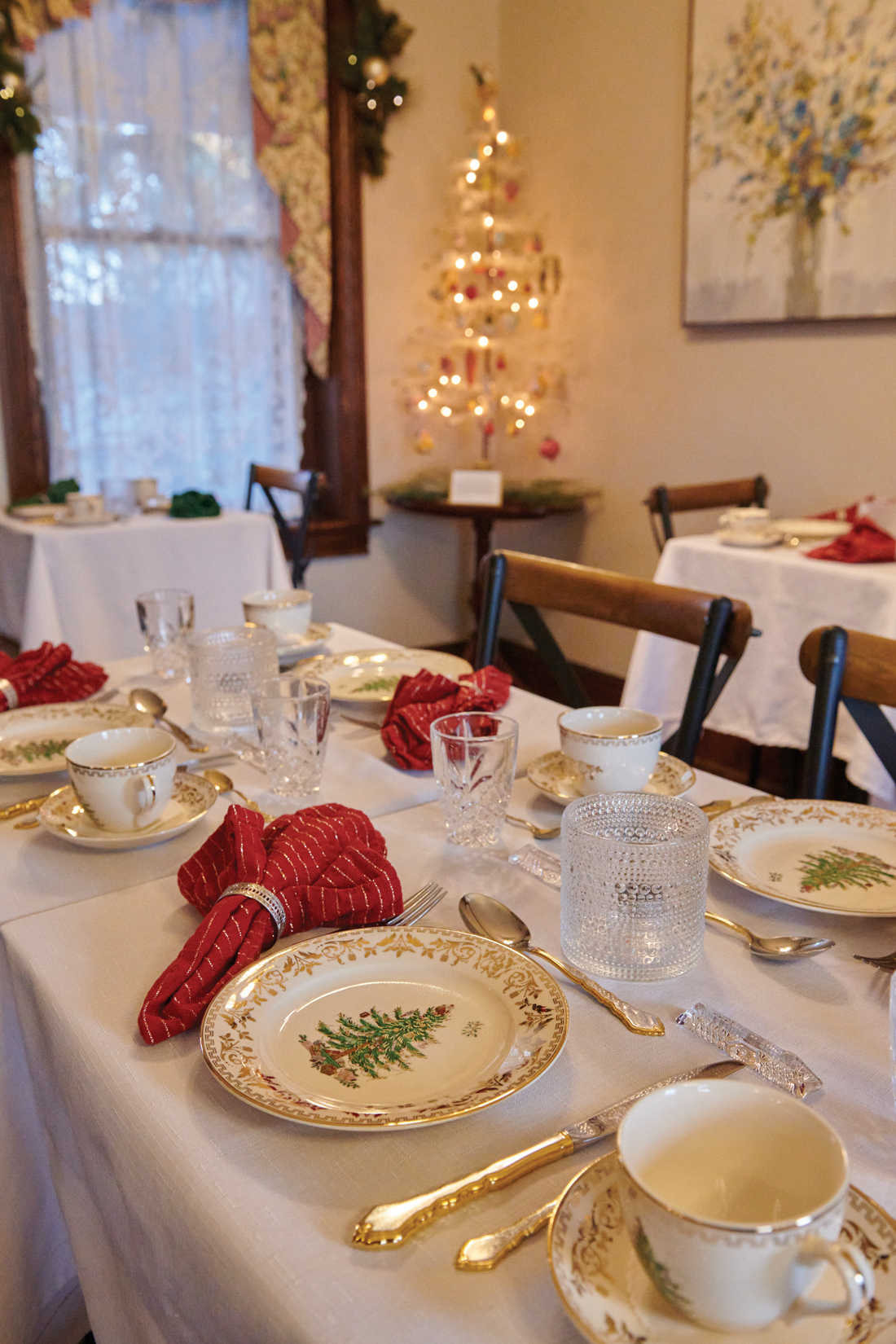
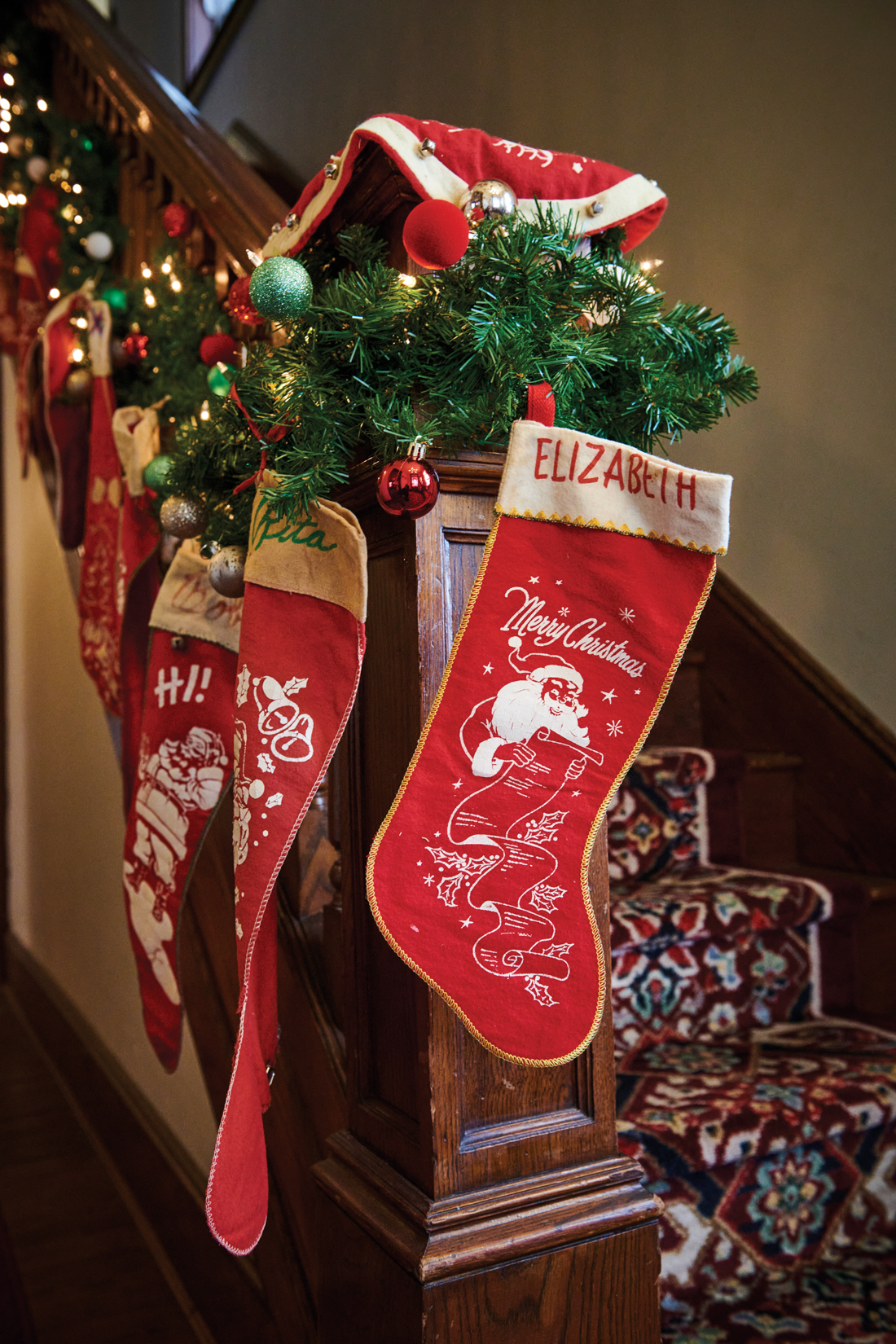
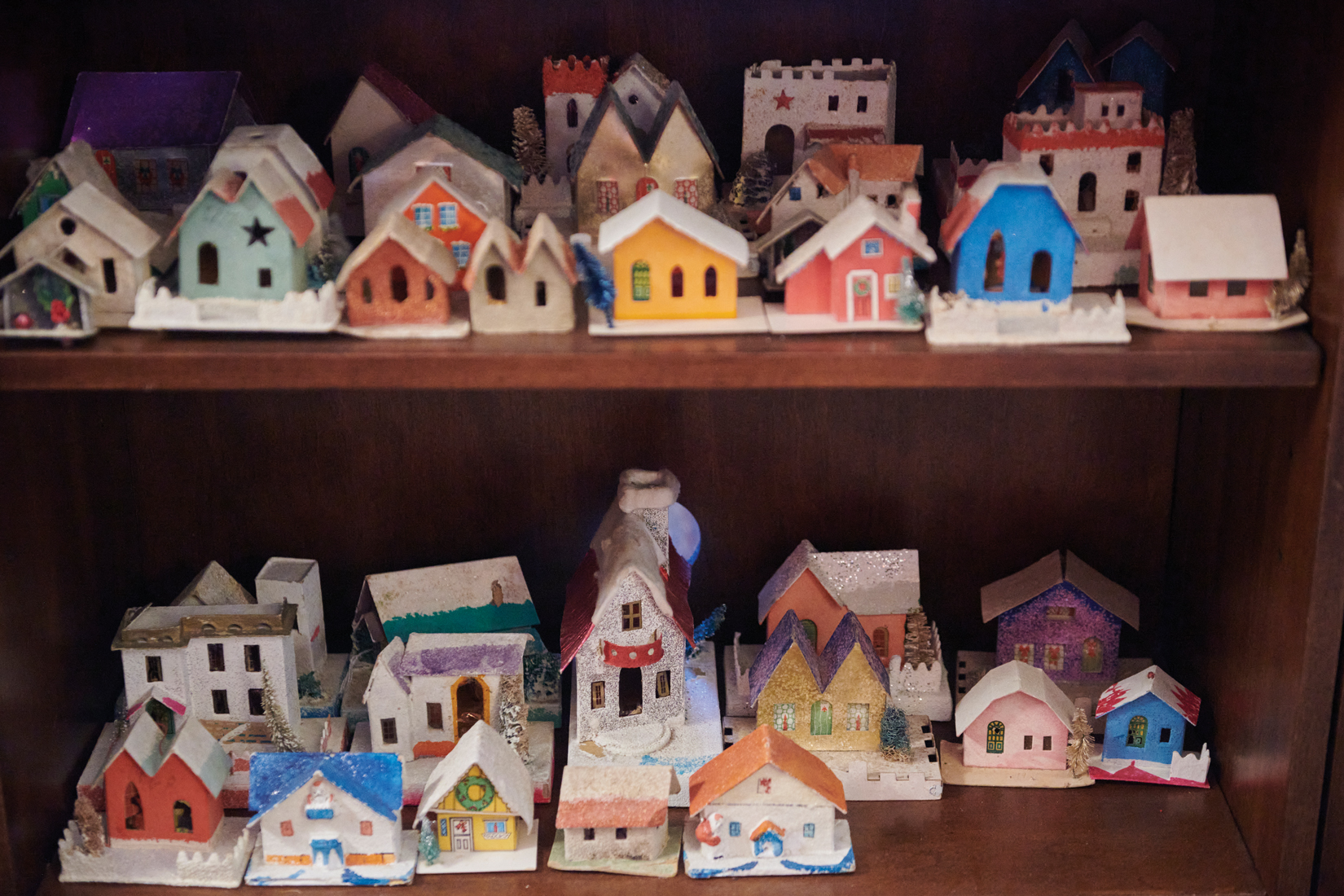
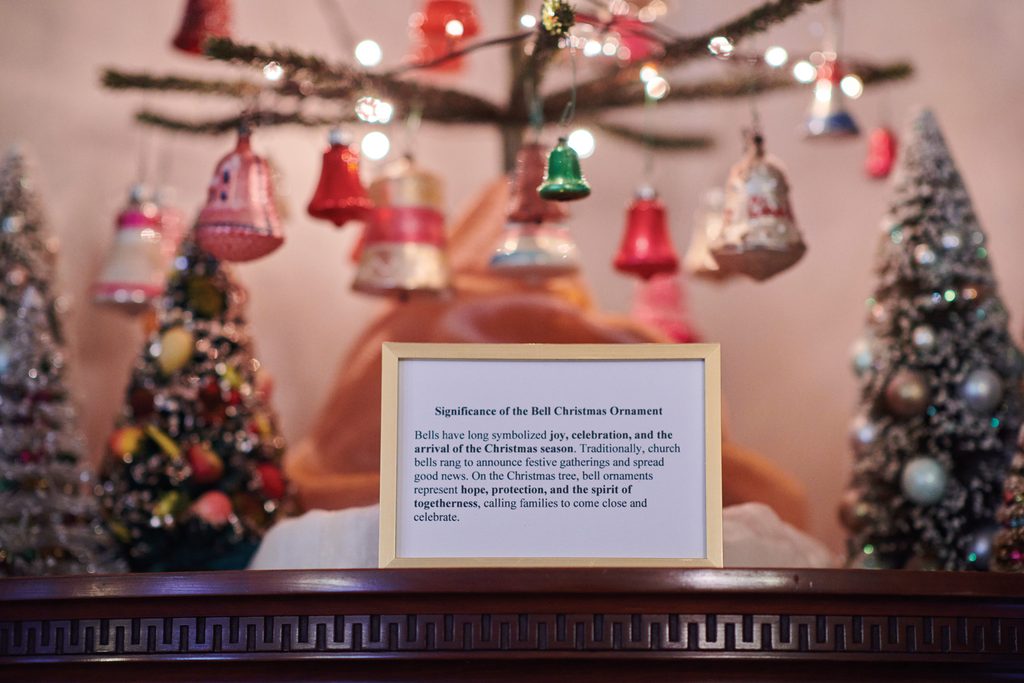
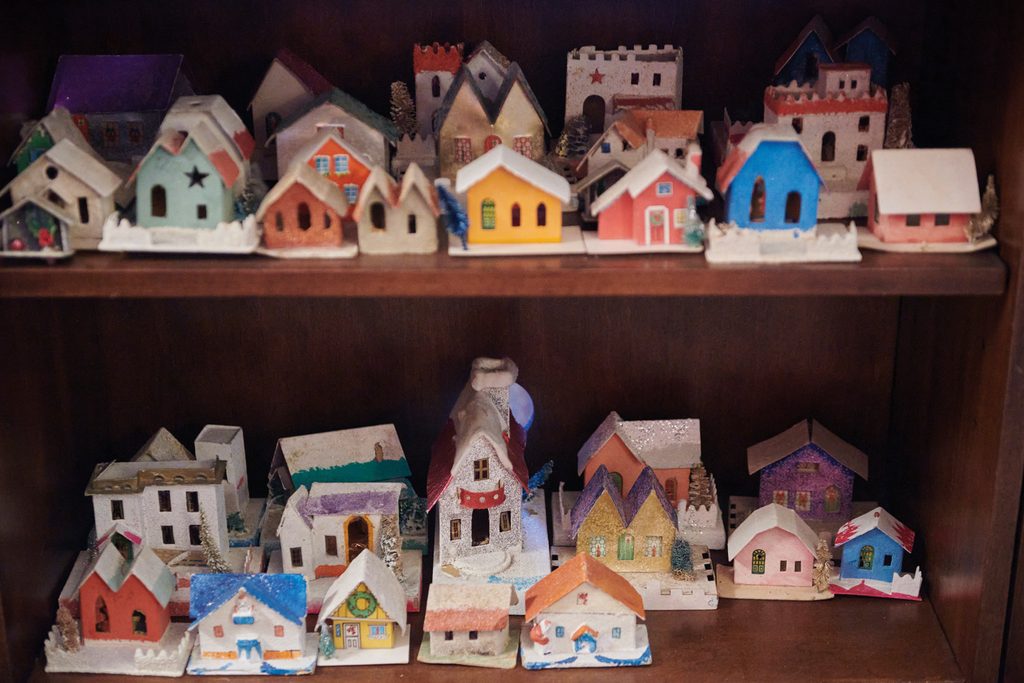
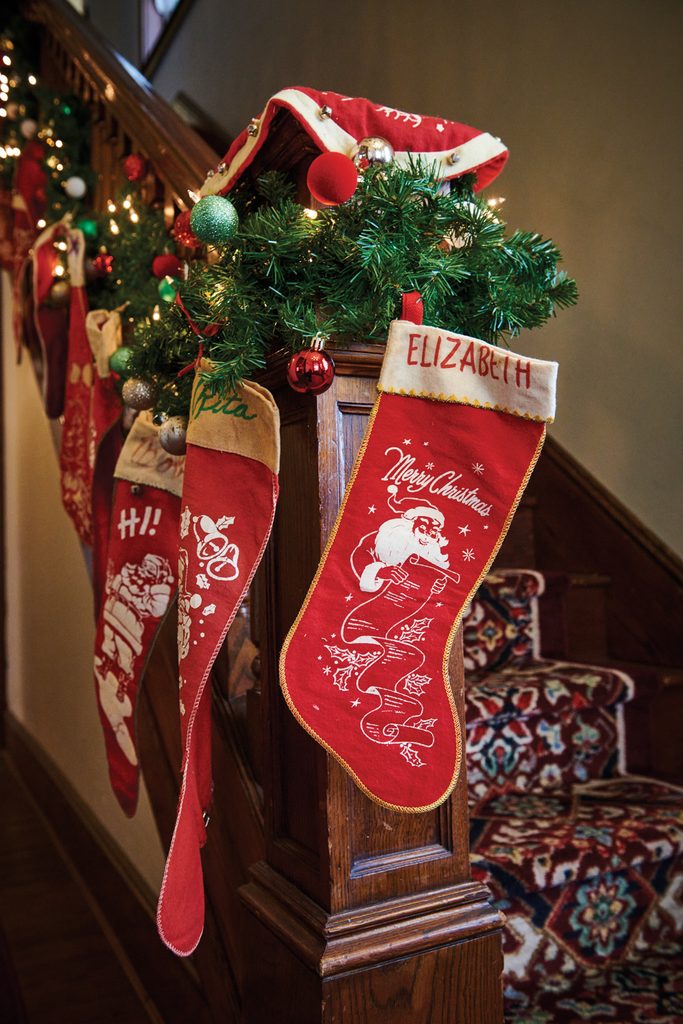
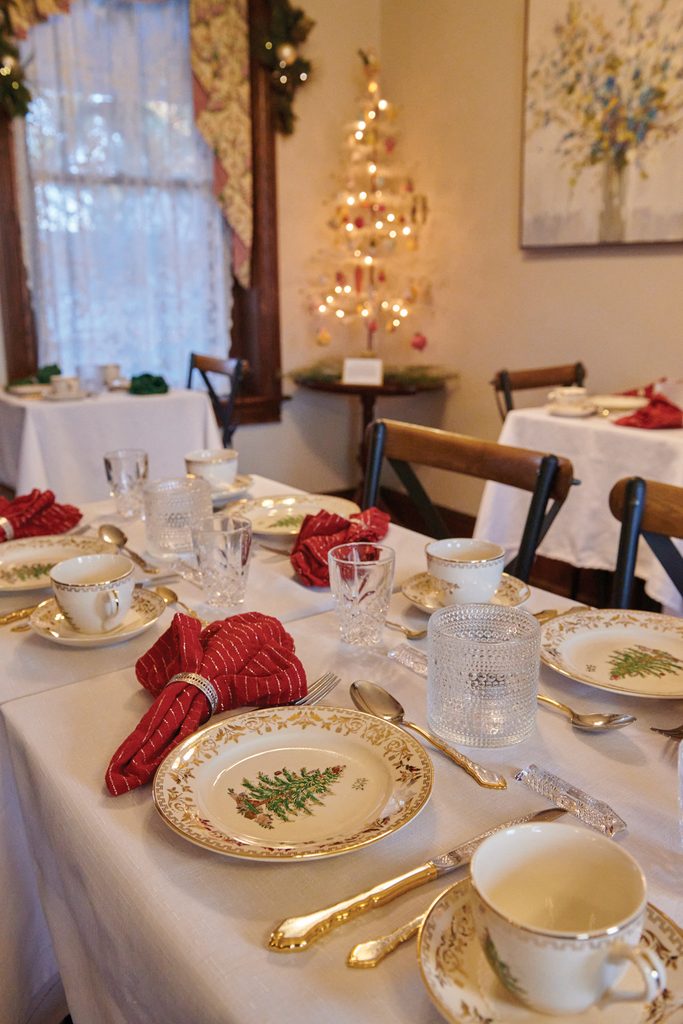
Last year, Carl used leftover ornaments to fill bowls and glass canisters, adding sparkle to every room. This year, he has been toying with the idea of incorporating ephemera, vintage storybooks and other such items into the holiday décor. His collection extends beyond ornaments and includes Putz houses, stockings, toys and china.
Carl has discovered he’s not the only fan of Christmas who is on the hunt for antique and vintage decorations. “Years ago, they couldn’t give the stuff away,” he says of ornaments, aluminum trees and the ceramic trees our mothers and grandmothers made in the ’60s and ’70s. Now, they all carry pricey sales tags. Even new products are designed and made to resemble vintage décor. He theorizes it has a lot to do with our desire to connect with the past, to our families and to our history. “Christmas tells our story,” he says of family heritage, as well as the nation’s history. “Every decade tells a story. Nostalgia hits the heart and helps us remember Christmases past.”
As for his own attachment to Christmas, Carl relates his fascination also has to do with the fact that he’s “never lost the idea of Santa Claus being real.” After all, believing is part of the magic of the season. Carl also has a new reason to keep the notion of Santa being real alive. He’s a first-time grandfather who will get to experience the excitement and joy of Christmas through his granddaughter’s eyes.
For more information, visit inn-spa.com.
Carl Kosko Recommends
Want to get into the holiday spirit, German style? If so, check out these three events:
Intercourse Village Holiday Celebration
December 4 & 5
Now in the 29th year, the event features open houses at area businesses, carriage rides, a Shepherd’s Walk and live Nativity Scene, as well as a German Christkindlmarkt that features German dancers, music, the Flourish Makers Market and more. Information: Villageofintercourse.com
Mifflinburg Christkindl Market
December 10-12
With more than 100 vendors, this is regarded as the oldest, authentic outdoor Christmas market in the country. Information:
Oldchristkindl.com
Lancaster Liederkranz Christkindlmarkt
December 13
Event features vendors, German food & drink, music, kids’ activities and more. Information: Lancasterliederkranz.com
Leave a Reply